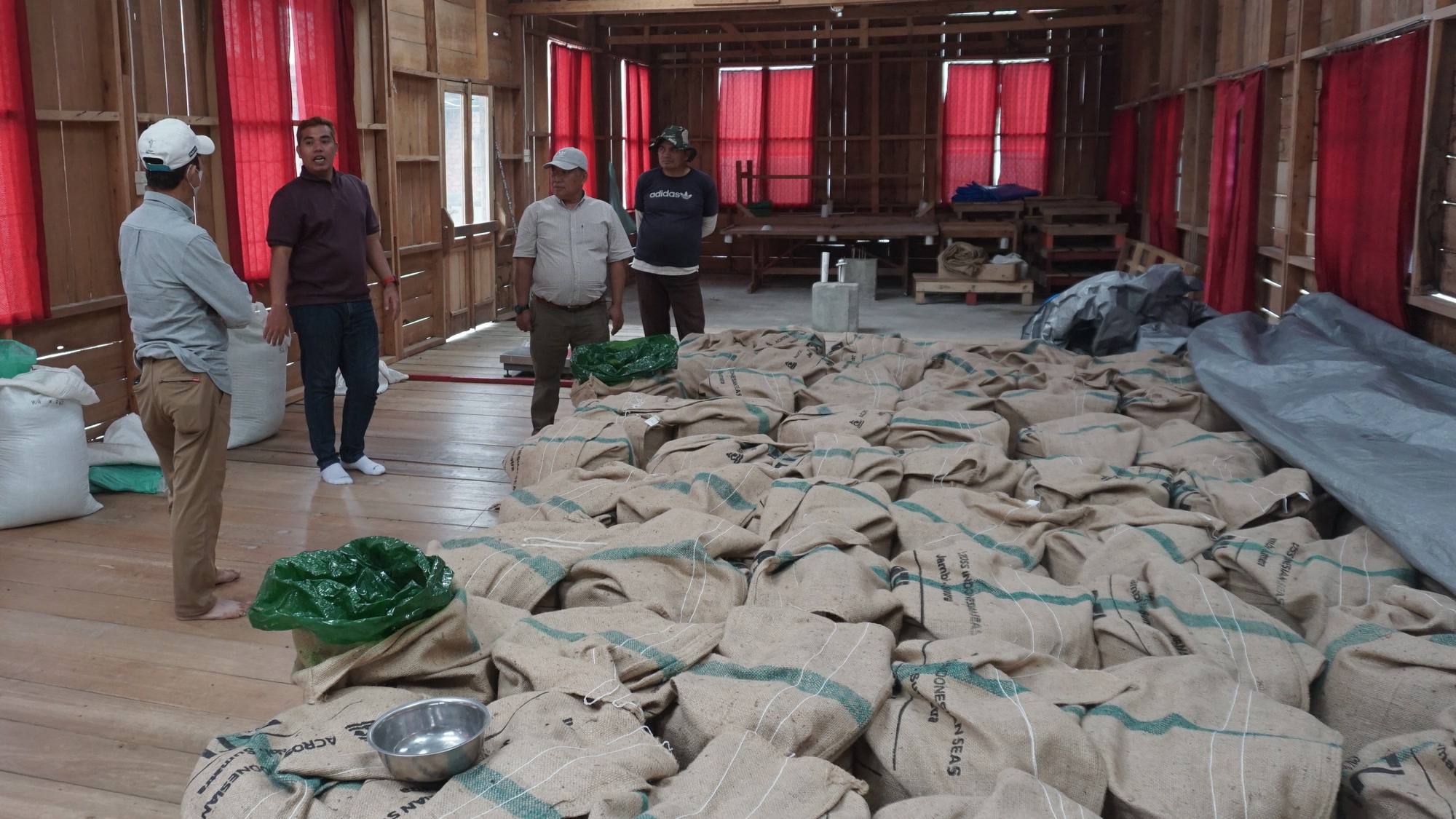
Our last container has sold through. Seven of its lots have moved to the Sold Out page and two are coming back as new crop. In October the next container was stuffed in Indonesia, sealed, and lifted onto a truck. It lands in Vancouver in November.
What Sold
That container carried nine lots from two producers, both in West Java. Six came from Frinsa in the Bandung highlands: a fully washed, a wet hulled, a natural, a lactic natural, and two experimental honeys, one fermented with a Lactobacillus culture and one with the Rhizopus culture used to make tempe. Three came from PKNI in Cianjur, a washed, a honey and a natural.
It was a narrow offering by design. Two producers, one province, and a chance to find out which processing styles Canadian roasters actually wanted to buy twice.
What Is Coming
The 2026 container also carries nine lots. The count has not moved, but almost everything behind it has. Five producers instead of two, and seven of the nine are coffees that were not in the last container.
From Kerinci, in Jambi on Sumatra, four lots. Three are processed by Alko Sumatra Kopi with quality validation by The Etalase Foundation: a fully washed, a honey, and a natural, all Andungsari and Sigararutang grown under shade. The fourth is a semi washed, wet hulled lot from PT AGTN, also known as Agrotropik Nusantara, a family operation that controls its coffee from farm to export and dries in parabolic domes at its Kayu Aro facility.
From Bajawa, in Ngada Regency on the island of Flores, two lots. The cherry is grown and taken to wet parchment by the member farmers of Koperasi Ekoheto Sejahtera in Desa Mukuvoka. PT Rumah Kopi Bajawa handles the drying, hulling and sorting. One is a fully washed, the other a natural. Flores is still rare in North American offerings.
From Garut, on the volcanic slopes of West Java, one natural, grown by the seventy five farmers of Koperasi Produsen Kopi Mandalagiri in Desa Cikandang and brought to export through Rumah Kopi Bajawa.
And from the Bandung highlands, two more from Java Frinsa Estate: a whole cherry natural from the Collective, and the estate's lactic natural, fermented in sealed barrels with pH, sugars, temperature and gas monitored throughout.
Three Islands Instead of One
The simplest way to describe the difference is geography. The last container came entirely from West Java. This one comes from Sumatra, Flores and Java.
That matters more than it sounds. Indonesia is not one origin, and a book built on a single province cannot show that. Kerinci and Bajawa and Garut do not taste like each other, and they do not taste like Bandung. Putting them in the same container is the first time we can offer that comparison from a single arrival.
What Happens When It Lands
The container arrives in Vancouver in November and the lots go into the warehouse from there. Cup notes, bag counts and 100 g samples are available on request, and we would rather send you coffee than a spec sheet.
If you bought from the last container, the Frinsa Collective Natural and the Lactic Natural are back as new crop. The other seven were not in it.
For wholesale inquiries or partnerships, contact us at:
or send a message to +1 (250) 488-2294